

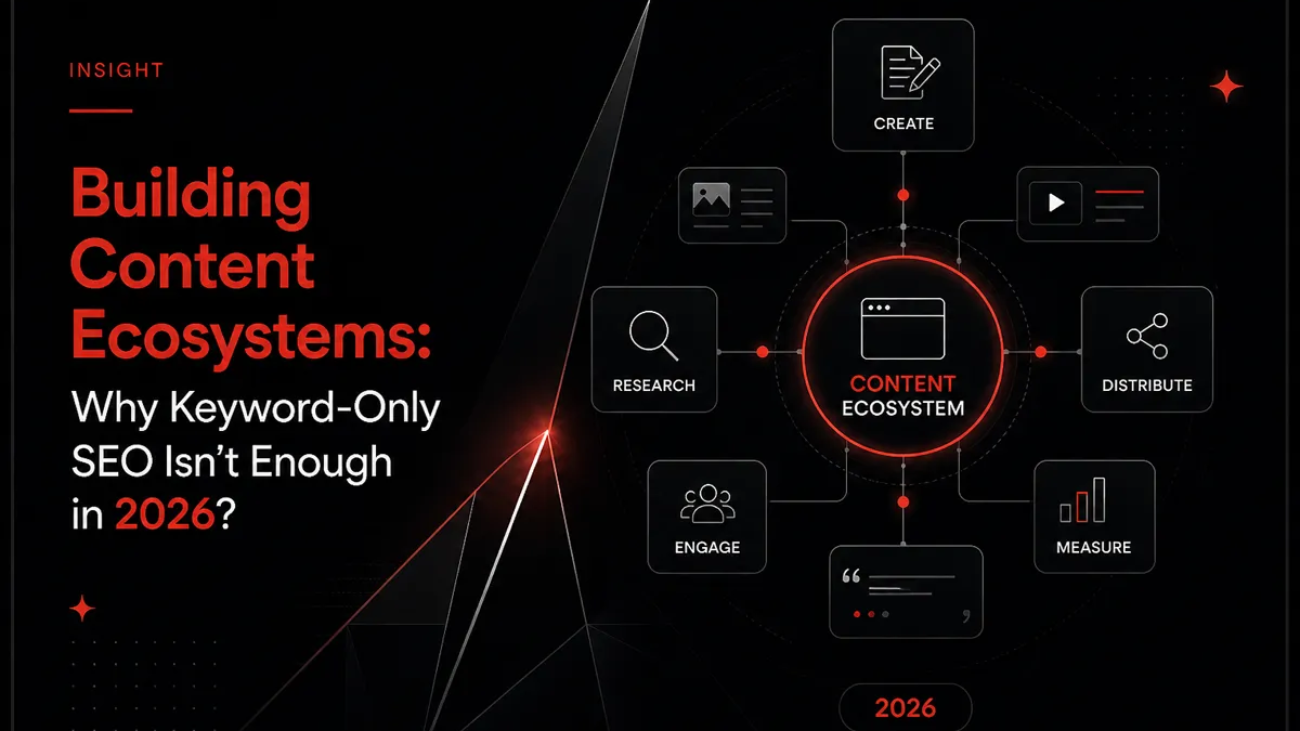
The shift from siloed content to ecosystems
In 2026, relying on a single platform or a one‑page‑per‑keyword strategy is a recipe for burnout and poor ROI. Marketing experts note that social media reach is declining; the average Instagram post reaches only about 3.5 % of followers. Platforms can change algorithms overnight, leaving brands scrambling.
Content leaders recommend moving from siloed tactics to a content ecosystem, a network of interconnected assets that guide a user from discovery to conversion. By treating your website, blog, podcast, email, and social media as parts of a cohesive system, you build resilience against platform changes and support long‑term growth.
What is a content ecosystem?
A content ecosystem is a structured network of evergreen assets (sometimes called “Forever Content”) that consistently attract, nurture, and convert customers. Examples of evergreen assets include:
- SEO-optimized blog posts.
- Podcast episodes.
- YouTube videos.
- Email sequences.
These assets compound in value over time; a single blog post can still drive leads years after publication. Rather than chasing viral hits, you intentionally create high‑value content and repurpose it across channels.
Why keyword‑only SEO no longer works?
Traditional SEO focused on targeting one keyword per page. While keywords remain important, search behavior has evolved:
- Multichannel discovery: Customers interact with many touchpoints before making a decision. They may find your video first, then read your blog, and finally sign up through email. A single page cannot support this journey.
- Algorithm volatility: Social media and search algorithms change frequently, reducing organic reach and making it risky to rely on one platform.
- User expectations: Modern audiences value trust, conversions, and longevity over short‑term popularity.
- AI‑driven search: Generative engines prefer comprehensive resources that answer multiple related questions.
How to build a content ecosystem?
- Choose your flagship format. Pick one primary format for “Forever Content”, such as a weekly blog post, podcast, or video. This becomes the cornerstone of your ecosystem.
- Repurpose intentionally. Break down each flagship piece into complementary assets. For example, a video can become a blog post, an email newsletter, social media snippets, and a podcast episode.
- Interlink your assets. Use clear internal links and calls‑to‑action. For instance, link blog posts to your digital marketing services page or other related posts. Encourage readers to explore other resources.
- Optimize for search and user experience. Apply SEO fundamentals (keywords, meta tags, alt text) and ensure fast load times. Use schema markup and tables of contents to help AI and human users navigate the content.
- Measure and iterate. Track which pieces drive engagement and conversions. Over time, refine your ecosystem by expanding high‑performing topics and retiring or refreshing underperformers.
Tips for sustaining your ecosystem
- Publish consistently. Aim for one high‑quality piece of Forever Content each week. Over a year, 48 strategic pieces can build a formidable content library.
- Audit existing content. Identify assets created “just for show” and refocus on pieces that align with your audience’s needs.
- Reverse‑engineer your sales process. Map the beliefs or questions your prospects must resolve before hiring your services and design content to address them.
- Use social media to amplify, not originate. Let social platforms showcase and direct traffic to your evergreen assets rather than serving as the primary content hub.
Conclusion
Building a content ecosystem is the antidote to algorithm fatigue and keyword obsession. By creating interconnected, evergreen assets, you nurture trust, drive conversions, and future‑proof your marketing. Whether you’re developing a brand strategy, planning digital campaigns, or offering business consulting, Prism can help you design a sustainable content ecosystem that supports long‑term growth.
Need assistance? Contact marketing experts to start building your ecosystem.
Add a Comment