

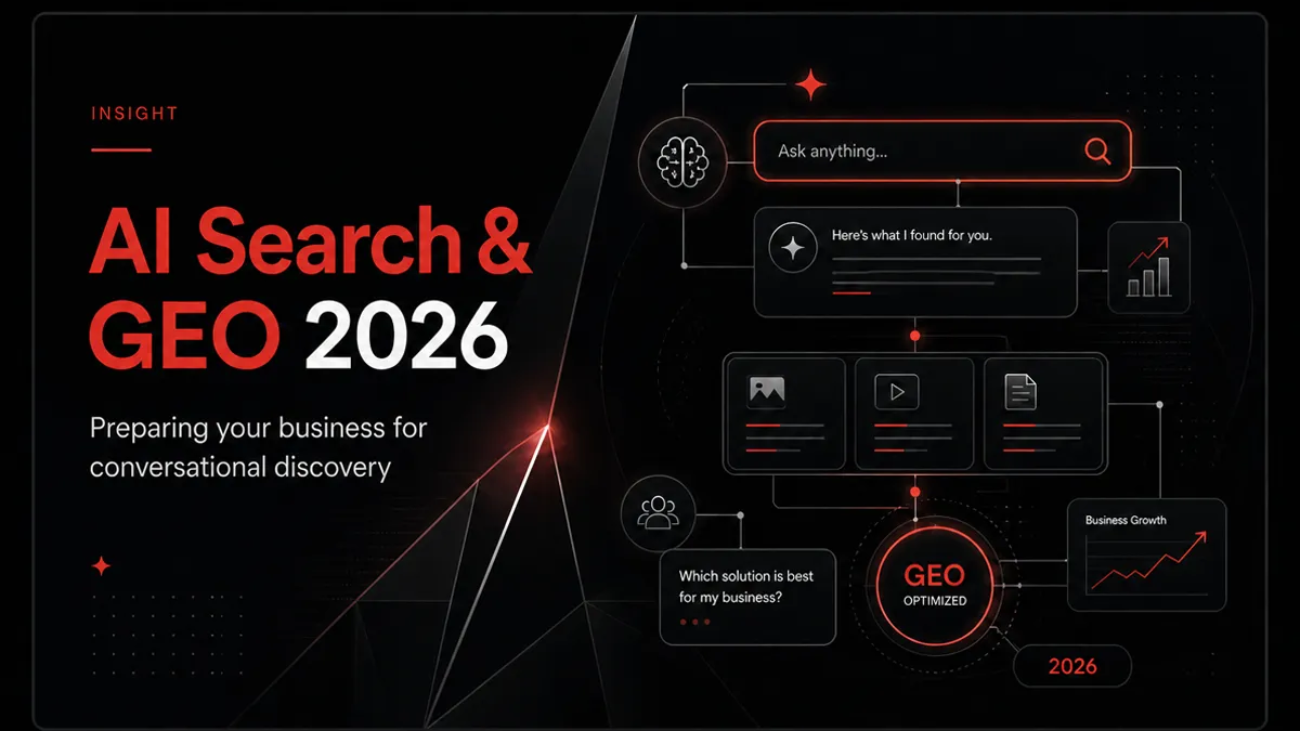
Search is no longer just about keywords. In 2026, customers speak to voice assistants, ask full questions and expect immediate, context‑rich answers. AI‑powered search platforms like ChatGPT, Gemini and Claude are now gateways to products and services, and they rely on generative models rather than simple keyword matching. This shift means businesses must think beyond traditional SEO.
Why AI‑powered search matters?
- Consumer behavior has changed. More than 6 billion people use the internet, and 5.66 billion social‑media accounts indicate widespread adoption of conversational platforms. Users are increasingly asking voice assistants and AI agents for recommendations rather than typing short phrases.
- Generative engines are growing. About 15 million internet users already turn to generative AI tools first for search, and this number is projected to reach 72 million by 2029. Early adopters will capture visibility in these channels.
- AI rewards authority and context. Unlike keyword matching, AI models synthesize information into answers. They prioritize authoritative content, clear structure, and up‑to‑date data.
What is Generative Engine Optimization?
Generative Engine Optimization (GEO) adapts traditional SEO for AI‑driven search engines. Instead of focusing solely on ranking pages in Google, GEO ensures that your content is easily consumed, summarised and cited by AI models. Key principles include:
- High‑quality, authoritative content: AI models prefer well‑researched articles with credible citations and current data. Outdated or low‑quality pages are less likely to appear in AI responses.
- Structured information: Clearly marked headings, bullet lists, FAQs, and schema markup help AI parse your content. AI engines want structured data to generate concise answers.
- Multimedia assets: AI search benefits from images, videos, and charts with descriptive alt text. Visuals support comprehension and can appear in generative answers.
- Freshness and accuracy: Regularly update content to reflect current trends, statistics, and legislation. AI engines favor up‑to‑date information.
Best practices for GEO in 2026
- Answer questions directly. Write content that addresses natural‑language queries (e.g., “How do I optimize my website for generative search?”) rather than just repeating keywords. Break complex topics into manageable sections so AI can retrieve specific answers.
- Use schema markup and FAQs. Add BlogPosting and FAQ schema markup to help AI identify your page’s purpose and extract answers. Include question headings such as “What is GEO?” or “How does GEO differ from SEO?”
- Optimize for voice search. Focus on long‑tail phrases and conversational language. Users often ask voice assistants to complete questions like “Where can I find a digital marketing consultant in Turkey?” rather than short keywords.
- Create content ecosystems. Build interlinked resources that cover related topics comprehensively rather than isolated pages. A content ecosystem ensures that AI models can cross‑reference your articles and present a holistic answer.
- Prioritize trust and authority. AI models penalize brands that over‑automate and lose their unique voice. Balance AI‑assisted content creation with human editorial oversight to maintain brand authenticity.
How can Prism help?
At Prism, we specialize in digital marketing strategies that embrace emerging technologies. Our team can:
- Conduct a GEO audit of your website and identify opportunities to improve structure, schema markup, and content freshness.
- Develop conversational content that answers the questions your audience asks via AI tools and voice assistants.
- Integrate AI‑powered analytics to monitor how your content appears in generative search results and adjust your strategy accordingly.
- Provide brand strategy and consulting support to ensure that your GEO efforts align with your business goals.
Need help preparing your business for AI‑powered discovery? Contact our digital marketing team today.
Conclusion
AI‑powered search and generative engine optimization are reshaping digital discovery. Businesses that adapt to conversational queries, invest in structured content, and maintain a strong brand voice will thrive in the AI era. By partnering with a forward‑thinking agency like Prism, you can unlock new opportunities and stay ahead of your competitors.